The Best Guitar Recording Setup
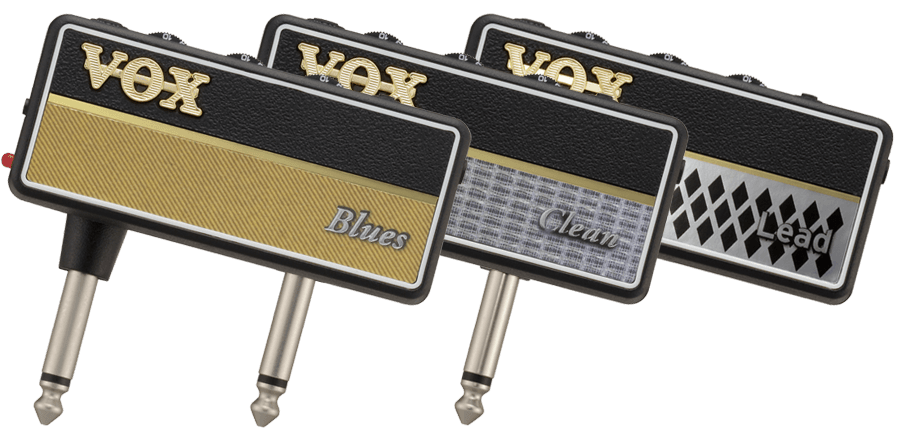
Why you should trust me: I've played guitar for twenty years and don't need five thousand words to get to the point.
If you're lucky enough to own a tube amp and pedal set that you can play at optimal volume in front of a nice microphone, go forth and conquer. You already have everything you need.
If you live under the constraints of modern millennial — bound by the acoustics of thin-walled apartments and angsty neighbors, read on:
There have been a lot of electronic gadgets that promise a dizzying array of amps and pedal effects, precisely emulated to give you the control you never had with the equipment you could never afford. Most of them sound wrong, the way a MP3 can. Digital. Fundamentally inorganic.
Leave it to Vox — pioneer of the Tube Amp — to figure out with the AmPlug 2. Maybe the first AmPlug was good too but it's the dos you need, and you should buy it today before you forget. It costs $35. Here's what you should know:
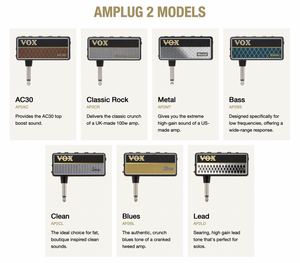
There are actually six different AmPlug2s: Blues, Clean, AC30, Bass, Lead,
Each unit has three main gain settings: clean (green), dirty (orange), and red. I keep my AC30 on green and orange most of the time; from there it's a matter of dialing in the tone, volume, and gain dials to taste (don't forget the corresponding dials on your guitar).
After a little fiddling I can typically get to the kind of tone I associate with a amp that comes up to my shoulders, with a warm tubey sound. It's great.
Here are the shortcomings:
The effects are mediocre. Each device has three different effects options when you rotate through via a small plastic button near the volume/tone/gain dials. On the AC30, the effects are:
- Phazer
- Delay
- Reverb
You can't mix them, and — more important — you can't adjust the effect. Every time I hit the reverb on the AC30 I want to give the X and Y a tweak, make it just a little less verby, but you can't.
Another modest shortcoming is the fact that the unit has no recording functionality built-in. Given the nature of the device, it would be feasible, if a little more expensive, to plug in an SD card and write the output to disk. Maybe for the AmPlug3. In the time being, here's the Record part of this guide.
Recording
The AmPlug2 outputs mono/sterio via a standard 3.5mm headphone jack. You can run a standard headphone cable from this to pretty much anything: a bookshelf speaker, your computer's line-in, a tube amp, or...
The Spire Studio.
The Spire has its whole suite of articles.
The Marshall